Buying a condo in Florida as a Canadian: the 2026 market, steps and costs
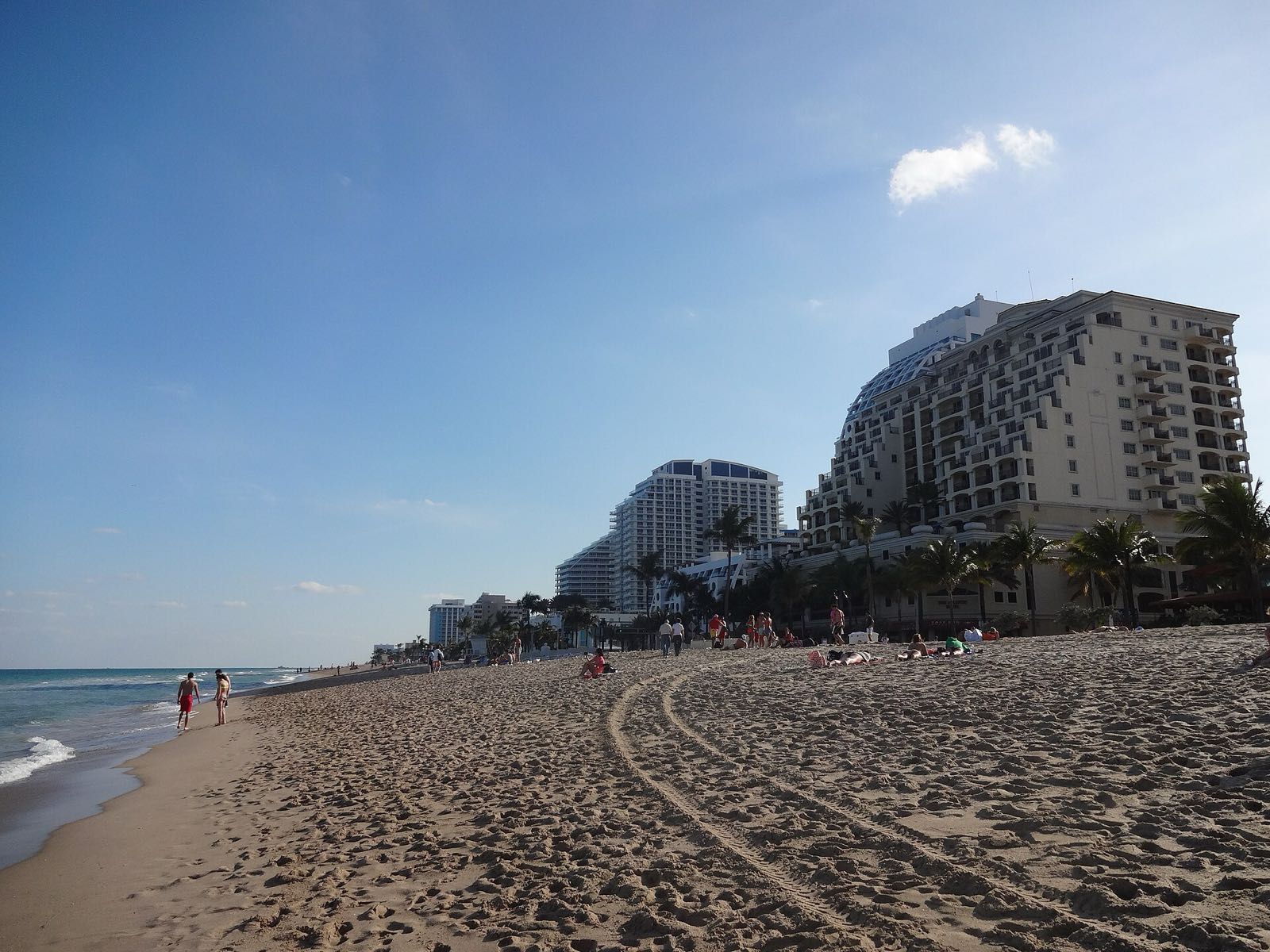
Are Florida condo prices still falling?
Statewide, the median condo price was down 6.5% year over year in August 2025, then stabilized: +2.8% in August 2026 and -1.3% since January. Inventory dropped 11.5% in a year, which is supporting prices.
| Region (condos, Aug. 2026) | Median price (US$) | 12 months | Year to date |
|---|---|---|---|
| Florida (statewide) | $298,000 | +2.8% | -1.3% |
| Miami-Dade | $408,000 | -0.5% | — |
| Broward (Fort Lauderdale) | $257,500 | +4.0% | — |
| Palm Beach | $300,000 | +5.3% | — |
| Port St. Lucie | $305,700 | +8.8% | -5.1% |
| Vero Beach (Indian River) | $240,000 | -5.9% | -0.6% |
| Tampa-St. Petersburg | $274,000 | +4.1% | +0.4% |
| Sarasota-Bradenton | $309,225 | +4.1% | 0.0% |
| Fort Myers (Lee) | $269,000 | -2.2% | -4.4% |
| Naples (Collier) | $429,500 | +4.5% | -4.5% |
| Orlando | $300,000 | -3.2% | -5.1% |
Sources: Florida Realtors and Miami Realtors, August 2026 data. In smaller regions the monthly median swings a lot: the year-to-date figure is more reliable.
Another measure shows bigger drops. Zillow's value index, which estimates the value of the same set of homes, put several markets 8% (Miami) to 28% (St. Petersburg) below their peak in spring 2026. The median depends on which homes sold that month; the index tracks the value of the same homes. Both are useful.
Why did prices fall?
- Post-Surfside laws. After the 2021 Surfside collapse, Florida required structural "milestone" inspections and structural integrity reserve studies (SIRS) for buildings of 3 storeys or more. Since late 2024, owners can no longer vote to reduce those reserves.
- Rising condo fees, often up 10% to 17% a year in several cities in 2024, plus special assessments to pay for work.
- Insurance, which rose sharply before starting to ease in 2026.
- Older buildings: about 71% of condos for sale on the Atlantic coast are over 30 years old.
Among foreign buyers who decided not to buy in Florida, 33% cited condo fees and 29% insurance.
Opportunity or trap? Both sides
| What favours buyers | What calls for caution |
|---|---|
| 7.7 months of inventory statewide (5.5 = balanced), 12.1 in Miami-Dade, 9.9 in Broward | Inventory is falling fast and prices are stabilizing: the negotiating window may be closing |
| Sellers get a median 93.3% of their original price: about 7% of room to negotiate | Older or poorly funded buildings could still drop |
| About 4 in 10 sellers cut their price in big cities (all property types) | Special assessments can come even after you buy |
| Insurance is starting to ease (Citizens: -8.8% in 2026) | The Canadian dollar is weak: US$1 = C$1.42 |
| Newer buildings or those with a completed SIRS: costs are known | US mortgage rates went up: 7.28% on a 30-year (October 2026), versus 6.34% a year earlier |
Canadians are still the top foreign buyers in Florida (18% of international buyers), and 75% of them pay cash.
The buying steps, in short
- Choose a buyer's agent and sign the written agreement required before any showing since August 2024. Their pay is negotiable.
- Get pre-approved or prepare proof of funds.
- Make an offer using Florida's standard contract (often the "AS IS" version), with a deposit held in escrow.
- Have the unit inspected during the inspection period.
- Read the condo documents: you have 7 business days to cancel after receiving them (3 days before July 2025; many online guides are out of date).
- Get association approval, if the declaration requires it (fees capped at $150 per applicant).
- Title search and title insurance.
- Closing: often possible remotely with a Florida online notary, even from Canada. Some lenders require you or an attorney-in-fact to be present.
Watch out for wire fraud: US$275 million in real estate losses were reported to the FBI in 2025. Confirm any wire instructions by phone, at a number you looked up yourself, never from an email.
8 questions to ask the association
- Has the milestone inspection been done? Can I read the full report?
- Is the SIRS complete and filed with the state (DBPR)?
- Are reserves funded at the recommended level?
- Is there a special assessment in progress, voted or planned? How much for this unit?
- Does the association have a loan to repay?
- How much have fees risen over 3 years?
- Is there any pending litigation?
- What are the rental rules?
The complete guide has 20, plus how to read a SIRS, an inspection report and a budget.
What does it really cost?
When you buy
- With a mortgage: 0.35% documentary stamp tax and 0.2% intangible tax on the loan amount.
- Deed stamps (0.70%): usually paid by the seller.
- Owner's title insurance: state-set rate, about US$1,575 on a $300,000 condo. Buyers pay it in Miami-Dade, Broward, Sarasota and Collier; sellers in most other counties.
Every year (example: US$300,000 condo)
| Item | Per year (US$) |
|---|---|
| Condo fees ($650 a month) | $7,800 |
| Property tax (about 1.8%) | $5,400 |
| Unit-owner insurance (HO-6) | ~$2,000 |
| Total, excluding flood and utilities | ~US$15,200, or ~C$21,600 |
Illustrative example. Fees, tax rates (millage) and premiums vary widely by building and city. Non-residents don't get the homestead exemption.
How to finance it
- Cash: the choice of 75% of Canadian buyers.
- US mortgage from a Canadian bank's US arm: for example RBC Bank, using your Canadian credit history with a standard 20% down payment, or TD.
- Home equity line on your Canadian home: used by some to pay cash in Florida, with variable-rate and currency risk.
- The exchange rate matters: on US$300,000, a 2-point difference in the exchange rate is about C$8,500. Compare your bank, currency brokers and Norbert's Gambit.
Whose name should you buy in?
Personal name, joint ownership, a Canadian trust or a company: each option has tax effects on both sides of the border. Tax professionals warn that a US LLC can lead to double taxation, because the CRA treats it as a corporation. At death, a US estate tax return is required above US$60,000 of US assets, but the Canada-US tax treaty often eliminates the tax for average estates. See a cross-border tax professional before you buy.
Key takeaways
- A sharp drop in 2025, stabilization in 2026: a buyer's market that's tightening.
- The real risk is the association: SIRS, reserves, special assessments.
- 7 business days to cancel after receiving the condo documents.
- Annual carrying costs: often 5% of value or more, before special assessments.
- See a cross-border tax professional before deciding whose name to buy in.
The complete guide: buying a condo in Florida (2026)
The market region by region, the 12-step process with a timeline, 20 questions for the association, red flags, every cost, financing, estate planning and resale. 20-page PDF, 2026 rules.
See the guide ($39)Sources
- Florida Realtors — Condos, August 2026
- Florida Realtors — Metro areas, August 2026
- Miami Realtors — Miami-Dade, August 2026
- Wolf Street — Zillow condo indexes, April 2026
- Florida Statutes — s. 718.503 (documents and cancellation period)
- Florida Statutes — s. 718.112 (SIRS and reserves)
- Florida Department of Revenue — Documentary stamp tax
- Florida Realtors — 2025 international buyers profile
- Freddie Mac — Mortgage rates
- RBC Bank — US mortgages
- IRS — Estate tax for nonresidents
- NAR — Real estate fraud 2025
General information only, not legal, tax, financial or investment advice. The market changes every month: check recent data and talk to an agent, a lawyer and a tax professional before buying.